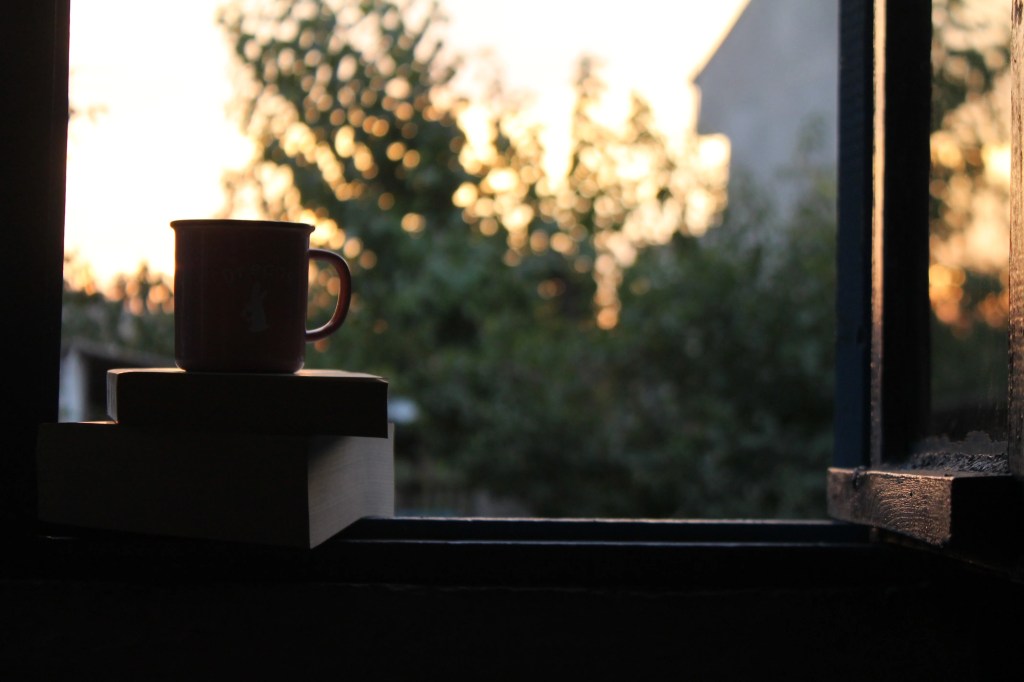
It was a Wednesday morning at the Little Brew Cafe in Massey. My area doesn’t have much in the way of spaces like this, and I cherish every visit I have there. The owners somehow feel like old friends despite our caffeine-based relationship and the space itself embodies a small town charm that transcends eras. There’s a small area where local artists and artisans offer up their work on consignment, locally roasted beans, eats made in house and specific spot that calls my name each and every time I walk in. If you know, you know. It is not the polished specialty coffee shops of the city centers, and while I do miss the precision and artistry they offer, this space holds a form of artistry all of its own. It is rooted less in refinement, and more in presence, ritual and the quiet act of creating somewhere people can belong and be seen.
It was there I met a retired farmer named Charlie Smith, who also happened to be a published poet, and former councilman, among other things. What started as a quick small town hello, turned into me abandoning my favourite chair (this is a big deal) and sitting down for coffee with a complete stranger and his wife. The more we talked, the more I swore I saw his eyes brighten, and his whole presence come alive. By the end I learned that I was speaking with someone who had earned the title of “bard of the North Shore”. As I listened to him recite a poem from memory, the portrait of the man who had shared his life story with me took shape in ways that felt familiar. I relished that coffee, and the opportunity to be trusted with the company of people I had only just met. Coming off back-to-back trips to Toronto, it was just what I needed to remind me of why I continue to call Northern Ontario home.
Thanks for reading! Subscribe for free to receive new posts and support my work.
I often mourn the opportunities to engage with the arts that exist in larger centers. What is true of the arts in those centers does not exist in the same way in Northern Ontario. Growing up in Timmins as a 90s kid, those spaces felt sparse or inaccessible. As I bounced around Northern Ontario cities and town in my early 20s, that didn’t change much, but in my late 20s I bore witness to a stronger emergence, and I knew I needed to be part of it. At first my goal was to bring spaces that “the south” had to “the north”, but the more I sat with it, the more I realized that it couldn’t be so easily replicated.
Like Charlie, many of us who engage in creative pursuits first do so quietly as a form of meaning making and quiet resilience. His time in the North Shore, his life, his farming practice, it was all wrapped up in his work. What he does isn’t just poetry for the sake of poetry. He is capturing his very essence to share with others in hopes that they may find themselves in his reflection. We might not have the level of infrastructure that the arts hold elsewhere, but what we have is the very core of what the arts have always been — expression and a desire to connect with something greater than ourselves.
I use the word “art” liberally to denote any and all forms of creative practice. Charlie is one of many of the artistically inclined folks I have had the pleasure of meeting. In every role I have held, there is one thing that stays constant. When arts and community are combined, there is something that shifts. I see it most in the way people begin to slowly step into themselves when they are given permission to experiment with their variations of meaning making and be witnessed and judged throughout that process.
It happens quietly, and then all at once. Last year I presented an opportunity to writers from the Paper Town Writers Collective for a poetry submission call for an artist led anthology. All of them were unsure to varying degrees, but I could see the hope and eagerness beneath it. All three of them had their work included in the final anthology, and I’ve had the pleasure of watching that excitement grow into confidence. What started a small moment of encouragement and opportunity blossomed into three emerging writers taking steps down a path they now know they can guide.
I’ve always loved the idea of using nature as a means to reflect, explain and learn both literally and metaphorically. Not long ago I stumbled upon a new word that expanded on that love — psychogeography. What sounds academic can be boiled down to one core idea; where we live shapes us. Within our province, Northern Ontario presents a unique set of conditions that offer lessons we may or may not be aware we’re learning.
In my experience, the North first taught me how to transmute isolation into solitude. Being alone without being lonely is a challenge that isn’t unique to our area, but the nature of our landscape is isolation by nature. Distance is a constant and sometimes unwelcome companion, but it also taught me to better understand the vastness, and from there, possibility. It also taught me about savoring and patience, alongside the silence to reflect on everything before and behind me. That interior life, the one built from necessity, became the soil that everything else, especially art, could grow from. Once you find your people, and community begins to take root, there is something real because you know what it cost to get there. Like the red pine in dry acidic soils or the cedar rooted in swamp, we make the most of what is given to us, even if to some it doesn’t seem like a lot. It is from one tree that a forest of voices emerges. It takes a lot of grit to be that first tree.
The natural landscape of our area has been a driving force for the birth of “the North”. While the Indigenous peoples of the area have been here since time immemorial, the settler relationship with this land began in industry — bush camps, mining town, and the rail and agriculture that popped up to support it. We were an answer to a demand for work and a steady supply for the extraction of resources. In many ways, I feel like we embody Ontario’s frontier and because of that, we make meaning from what industry leaves behind. It takes courage to embrace what we have while mourning what we wish could be. Art is how we survived, even if it isn’t obvious at first.
The evidence lies in the way a local painting of a headframe hang in public spaces as a gesture of community pride, an unassuming farmer can do double duty as poet laureate, and the simplest things can become a genesis of creativity, meaning and story. I have relived my childhood in water colours of winter streets I used to wander, witnessed the artistic attention in the way every day people stop to take pictures of a sunset they’ve seen a thousand times, and seen artists from our neck of the woods swept away from here as the price for embracing their fame.
The arts are hidden in the way our dated spaces are not intentionally kitsch, but exist that way out of necessity. Someone at some point poured their heart into designing that space, and it became an expression of not just a time, but of eras. Across the ages art is what brough us together; not just music, books, paintings, poems and photographs, but blankets, handmade sweaters, carefully curated spaces, grandma’s cookies, and community logos. Whether alone or together, art was present in some shape or form giving meaning to the mundane.
The soul of creative expression lives in our everyday lives in sometimes obvious or unassuming ways. It is not always held to the same esteem as elsewhere, but it is ever present and even in folks who would never dare don “artist” or “creative” as a proverbial hat. All of this to say that we are hidden but we are vibrant. The nature of this rugged land is harsh and yet we have demonstrated the power to alchemize our struggles, and grow like the stubborn and resilient pines that hold our soils together. We might not always be seen, but if nothing else, we have learned that the most important thing is how we see ourselves, and the place we call home. The soul of the North is to be an artist in whatever way that will save you. Maybe the work is not to search elsewhere for what we think is missing, but to look again at where we stand, and begin the work of turning it into something that can carry us—and those who come after us.


Leave a Reply